


Guide: What happens when you read to your child
Sponsored by Akademibokhandeln
Reading to your child is not just flipping through a book. It is a moment of closeness, curiosity and magic. It's a chance to stop everyday life and meet in fairy tales, pictures and stories. Whether your child is a few months old or almost ready for school, there is a book for you - here and now!
What actually happens when we read together? Did you know that 70 % of parents start reading to their children before the age of one? This is no coincidence. Children who share books with an adult at an early age often retain their interest in reading well into adulthood. They develop a larger vocabulary, a better understanding of stories, and often find it easier to start reading themselves. That's why we've put together a guide to reading for children of different ages.
Reading is one of the easiest and most powerful ways to give your child a linguistic head start. At the same time, it sparks curiosity and trains your child to think for themselves, ask questions and discover the world. It doesn't matter how you read, or for how long. What matters is that you do it together. A few minutes on the sofa, a page at bedtime, or just looking at a picture and talking about what you see. Every moment with a book creates more than language. It creates security, closeness and memories that linger ❤️
0-12 months: Voice, rhythm and relationship
It may feel early, but this is when it starts. Your child recognizes your voice from the womb and loves to hear it. Reading at this age is not about understanding content - it's about listening, watching and experiencing. When you read a book, sing a rhyme or just tell your child what you see on a page in the book, you are giving them important building blocks for language, confidence and connection.
Please choose: cloth books, black and white books with high contrasts, pictures of faces or simple rhymes with rhythm. A cozy tip is The cuddly sheep - a fluffy cloth book with felt flaps, a mirror and black-and-white illustrations that will pique your child's curiosity right from the start.
Think of it this way: It's okay if you only read one page. Or if the book is mostly chewed on. It's all part of the discovery.
1-2 years: Point, repeat, listen
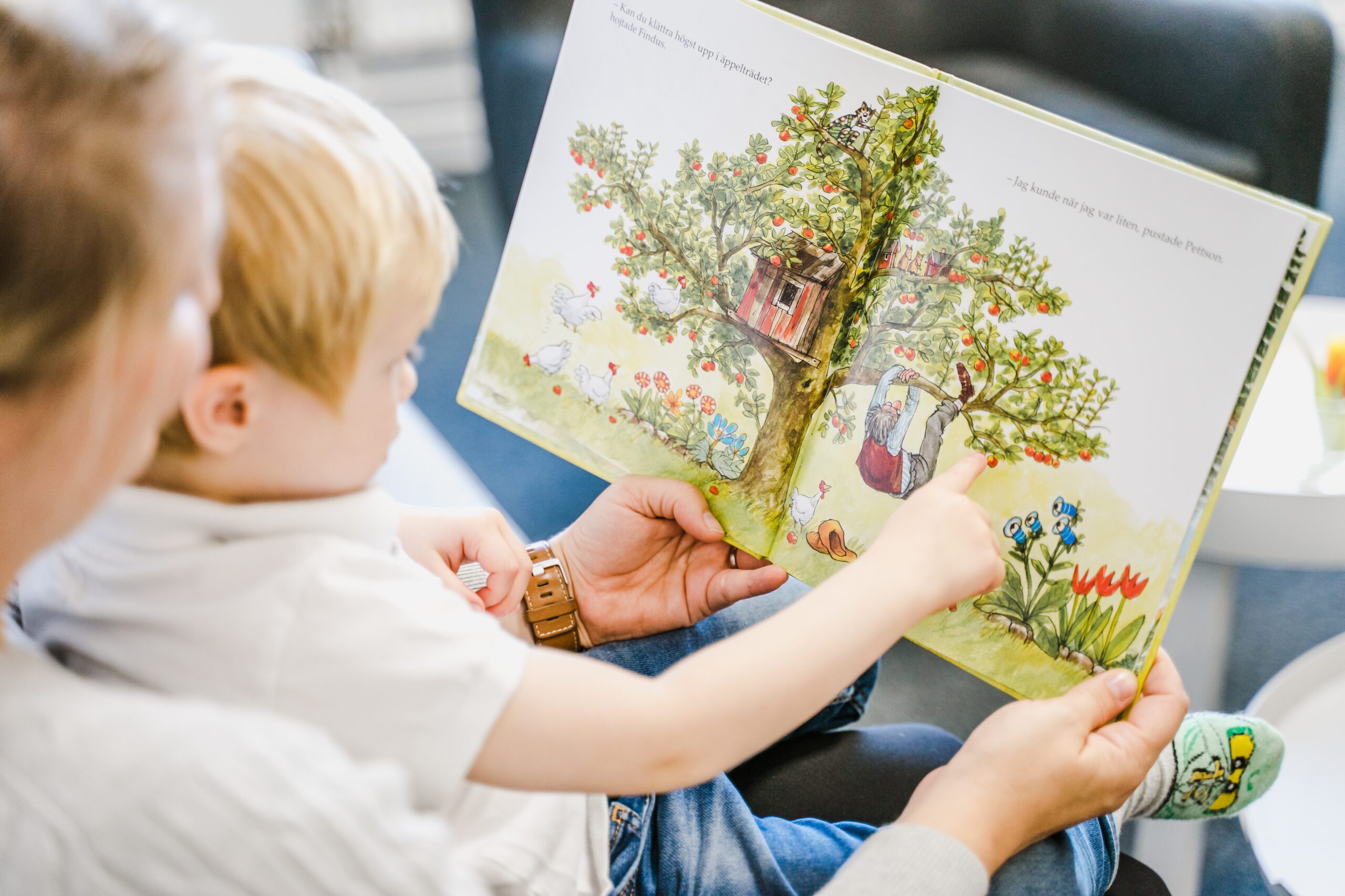
Now the book becomes something exciting! Children start to understand that the pictures represent something, and many learn their first words through picture books. Favorites are read over and over again (yes, it can get boring - but that's how children learn!). Children at this age like simple sounds, clear pictures and stories where they can be active themselves. Integrate your child into the world of books with your own empathy and energy!
Feel free to choose: touch books about everyday life, animal or vehicle themes, books with sounds, tabs to lift and books with rhymes. A fun example is Pettson and Findus build a car, a charming story with detailed illustrations that takes children on a clever everyday adventure - perfect for curious little explorers.
Tips: Ask: "Where is the dog?" and wait for the answer. Let the child show, mimic sounds or just point. You're having a conversation, even if it's without words!
2-3 years: Language explodes
Vocabulary is exploding now - often several new words a day! Children start to understand contexts, follow short stories and express emotions. Now you can talk more about what happens in the book. What is the rabbit doing? How does it feel to lose your teddy bear? Reading becomes both a game and a conversation between you!
Feel free to choose: books with short stories, clear emotions, everyday drama (such as "go to the doctor" or "start kindergarten"), rhymes and humor. A suitable tip is Vera and Ville on the farm - a warm and playful story with a lot of recognition from the everyday life of young children.
Tips: Make voices, let the child fill in words, mimic sounds, count things in the pictures - this is the age where play and language go hand in hand.
3-4 years: Imagination and recognition
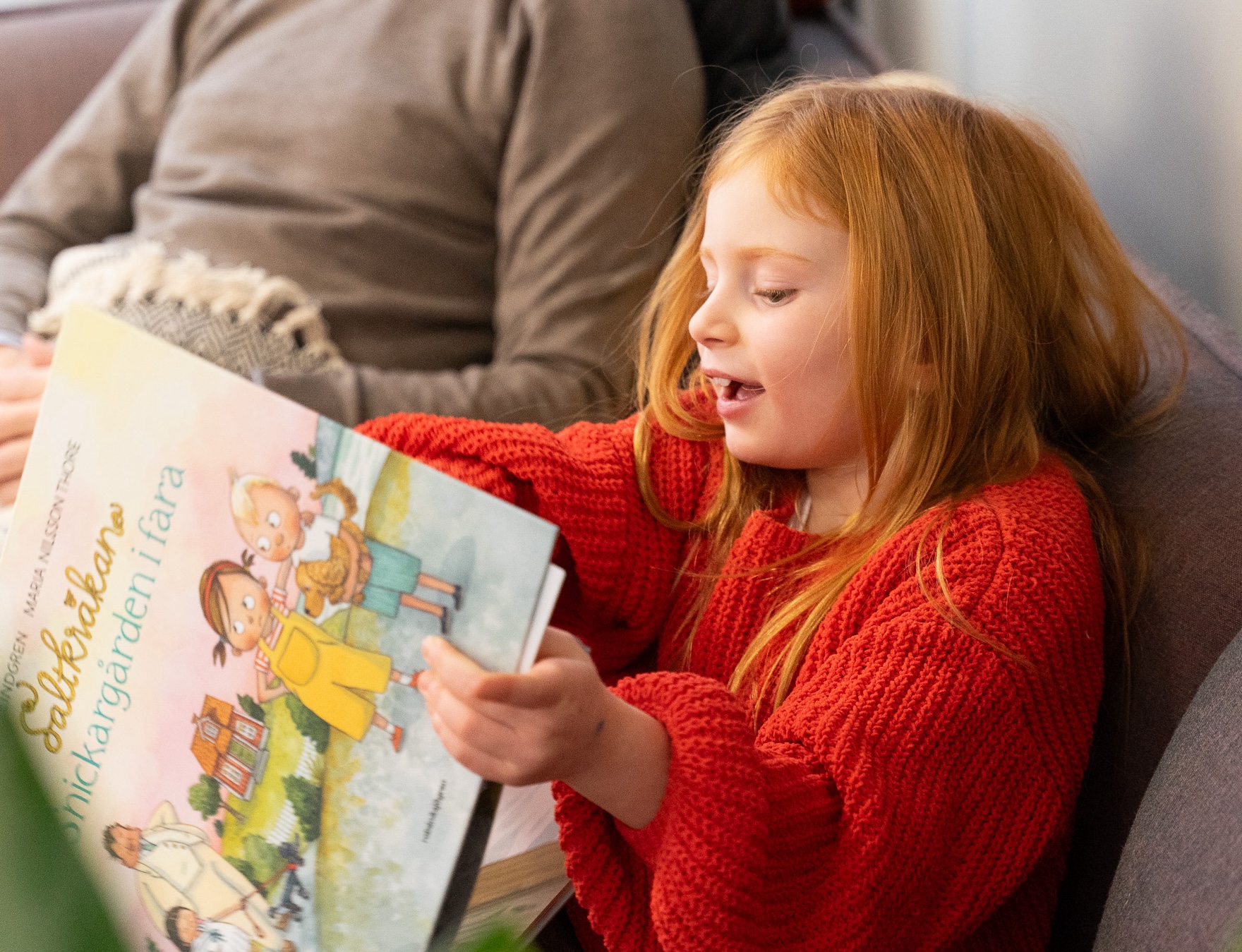
Children can now empathize with real stories. Feelings become important - both their own and others'. Books can be about courage, friendship, feeling different or doing something for the first time. This is also when many people start asking "Why?", and books can be a safe way to talk about difficult things.
Please choose: picture books with emotions, fairy tales, stories about relationships, humor or classics with a clear plot. A good example is When Mother Moo met the Crow for the first time - a warm and humorous story of unexpected friendship that goes straight to the heart.
Tips: Read slowly! Pause occasionally and ask what the child thinks will happen, or how a character is feeling. It's also okay to talk more than you actually read.
4-5 years: Big questions and curiosity
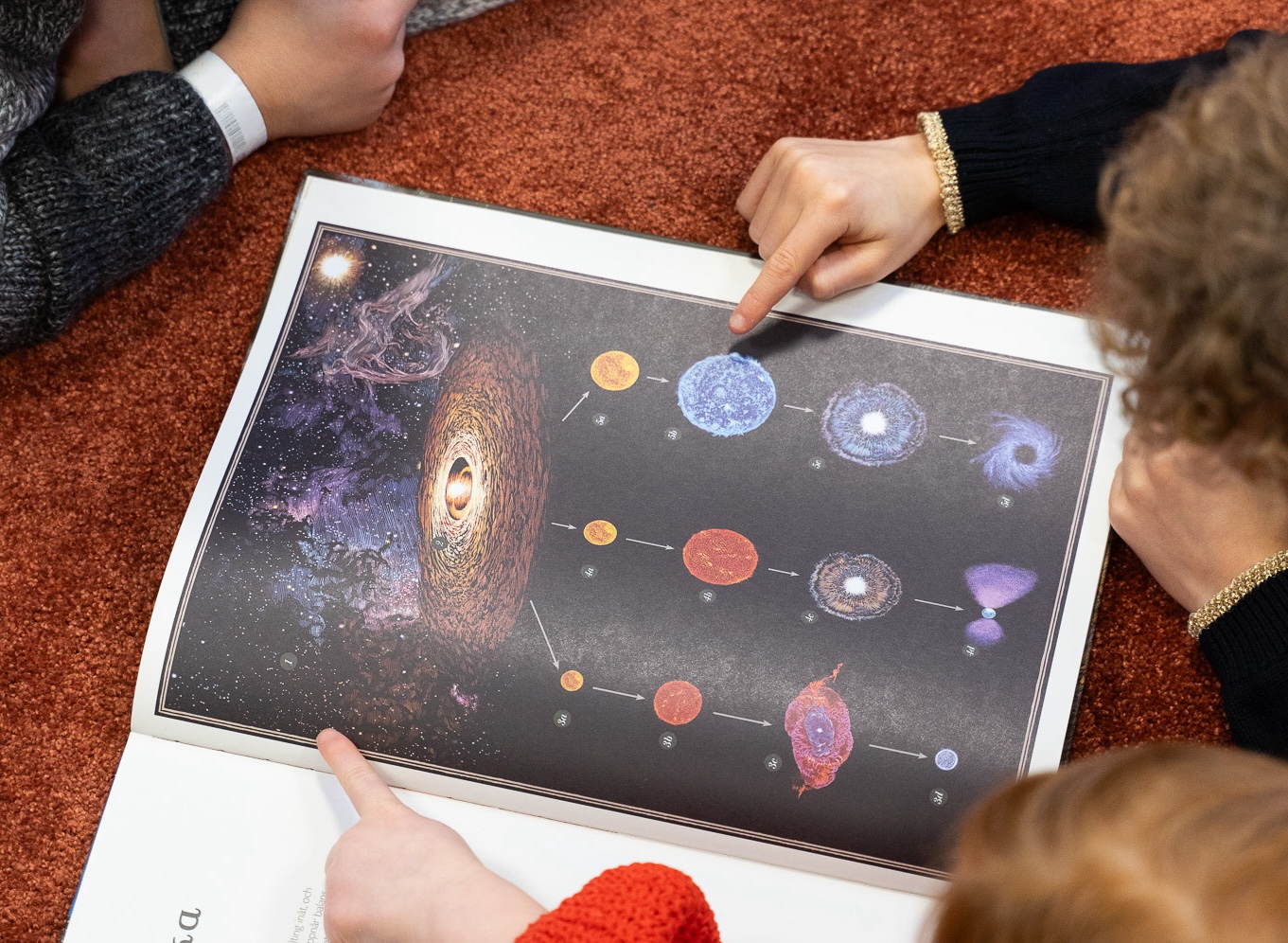
Now the child can follow longer stories and begin to understand humor and emotional nuances. Interest in the world grows and questions about space, the body, animals and death can emerge. This is also a good age to start with short chapter books - preferably a little bit every night.
Please choose: non-fiction books based on the child's interests, chapter books with pictures, fairy tales or books about growing up or starting school. A wonderful example is That Emil guy - a new version of the classic story of Emil in Lönneberga, full of humor, mischief and warmth that children aged 4-5 usually love!
Tips: Read in several rounds. Let the child choose the book sometimes - it strengthens independence and the desire to read.


